
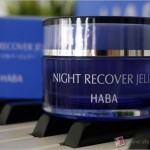
5 things to know about your skin at night

I’ve been very busy this stretch and there were several nights I considered “burning the midnight oil”. However, I still tried my best to sleep around 11pm because I know if I don’t, I would look like hell the next morning. And it’s not just getting that eight hours of sleep, it’s about getting to bed at the right time and having quality sleep. Here’s why:
1. Skin cell renewal rate is higher
Skin cell regeneration is slightly faster at night than during the day according to Alex Khadavi, M.D., associate professor of dermatology at the University of Southern California (source). This was also highlighted in the book “Good Skin” by Ingried Wood. “According to our body clocks, different body cells are more active at different times of the day. Skin cells do their repair work most effectively at night. Research shows that skin cell regeneration almost doubles at night, peaking between 23:00 and 4:00. Production of collagen is boosted, harmful free radicals are destroyed and cell damage is rectified.”
Tip: Go to sleep by 11pm!
2. Skin is more receptive to active ingredients
It is better to apply products with active ingredients in the night as your skin is able to absorb the active ingredients in skincare products better since active ingredients are less effective when exposed to sunlight. In addition, your skin would not have to compete with the other products you apply like makeup or sunscreen to fight the UV rays, pollution and other harmful environmental elements in the day.
Tip: Use your vitamin C serum or other anti-aging products at night!
3. Skin temperature is higher
Skin temperature is higher in the night; the body temperature is lower in the morning, due to the rest the body received, and higher at night after a day of muscular activity and after food intake (source). As such, your skin care products can seep deeper into your skin for better results.
Tip: Moisturize your skin before going to sleep.
4. Trans-epidermal water loss is higher
Trans-epidermal water loss (or TEWL) is defined as a measurement of the quantity of water that passes from inside a body through the epidermal layer to the surrounding atmosphere via diffusion and evaporation processes. According to an article written by the Departments of Dermatology and Neurobiology & Anatomy, Wake Forest University School of Medicine, Winston-Salem, North Carolina, USA, TEWL is significantly increased during the night and is minimal during the morning and that is why our skin can sometimes feel more itchy at night.
Tip: Use products that can provide hydration to your skin!
5. Melatonin production increases
Melatonin is a natural hormone made by your body’s pineal gland and your body produces more melatonin when it is dark. Melatonin also helps control the timing and release of female reproductive hormones. It helps determine when a woman starts to menstruate, the frequency and duration of menstrual cycles, and when a woman stops menstruating (menopause). Some researchers also believe that melatonin levels may be related to aging. In relation to skin, melatonin is also able to suppress ultraviolet (UV)-induced damage to skin cells and shows strong antioxidant activity in UV exposed cells. Hence, melatonin may counteract or buffer both environmental and endogenous stressors to maintain skin integrity. (source)
Tip: Turn off all the lights and draw your curtains!
Choose your night care products carefully
One thing to note is that you shouldn’t try to over nourish your skin in the night as very rich and creamy creams interfere with the processes of the skin trying to regenerate. According to Dr Haushka, while you sleep your skin is actually hard at work regenerating itself, balancing oil production and expelling impurities. Regular application of night creams interferes with these essential tasks, and over time skin becomes less able to care for itself. Covering the skin with moisturizer 24 hours a day sends a signal to sebaceous glands to cut down on moisture production, resulting in even drier skin that becomes dependent on moisturizing products just to appear “normal.†Hence, do remember to let your skin breathe!
And yes, I haven’t been watching the World Cup matches.
Related posts


Comments
Leave a Reply
You must be logged in to post a comment.









I knew that the body repairs itself at night but I had no idea it does so much!
I’ve been toying with the idea of drinking my meiji collagen before going to bed but I had the fact that I might get up in the middle of the night to pee!
If I sleep by 11pm, the next morning I sure die! haha.I usually sleep 9pm from mon to fri, coz I wake up at 5am every day.Need to ae BF & obento for the kids to school.Send them & come back got to do housework.No nap coz if I nap I will get headache.
oh! i’m lucky cuz that’s what i do exactly everyday and really it’s good for the skin ?
i notice by using products especially whitening products during the night b4 u sleep, u see the results faster?
but i didn’t know bout the last bit of over rich creams interfering with skin renewal process! i’ll bear that in mind!
Hi
Can you recommend a good vitamin C or anti aging serum. There are so many on the market and how can you tell they are effective?
Hi,
May I know what is your current night regime?
i used to sleep anytime from midnight-2am in my previous job and now i sleep 10.30-11pm in this job… my skin feels the same
Maybe you can drink it about an hour or two earlier?
Going by the time you wake up, you should be sleeping earlier like you do. I wish I can sleep by 9pm. I’ll be lucky to get to bed by 10.30pm.
It should help cos the whitening products have active ingredients that will repair your skin while you sleep.
I’ve tried John Masters Organic Vitamin C Serum and it was quite good for me. Alternatively, you can make your own with L-Ascorbic acid purchased from DIY ingredient supplier.
After cleansing, I use a face mist, an anti-aging oil and a skin lightening serum. Twice or thrice a week, I add vitamin C supplement into the serum. The products I use are from Marie Veronique Organics. This was my recent review:
https://www.vivawoman.net/2010/06/24/marie-veronique-organics-anti-aging-products/
I guess you’re pretty young and your skin is quite good. But perhaps different people have different internal clocks. I remember when I was younger, I had lesser problems with my skin when I slept later. But now, if I sleep beyond 12 midnight, my skin will produce more oil and if I’m not careful, I’ll get acne. The best time for me to sleep is 10pm – 6pm. But I rarely get to sleep by 10pm.
wow this is super interesting! i was also on the dr hauschka website the other day and it says that night time is when the skin literally ‘breathes out’ everything it absorbed during the day and repairs itself. also skin is most active between 2am-4am and thats why ecszma sufferers have really bad itching between those hours… my ecszma has recently come back after years and i find that around 3am the itching is unbearable..
So your itching is also worsen in the night? I remember itching quite badly in the middle of the night when I had these red patches on my body. Sometimes I would wake up and scratch non-stop.
You might want to consider moisturizing your body to prevent the flareups. My husband has contact dermatitis recently and would itch badly in the night. He would always feel better after applying moisturizer.
I think that our skin is most fascinating. It’s so evident that it’s trying to breathe and recover at night because in the day it works so hard- sweating, protecting our internal organs and what not. Sleeping early is like food for our skin and it’s something I hope to continue doing even after giving birth ?
dear, just a suggestion, maybe you can blog about products that can ‘help’ us to sleep and sleep better…
Hi Sesame
A little confused here. You mentioned in the article above that we should not put moisturiser at night but you put anti-aging oil. Does that mean oil is ok but moisturiser is not?
I am currently using A’kin skincare range and am using their Cellular Radiance Serum and Antioxidant night cream on face and neck at night. On top of that, I also slather some rosehip oil on the neck as there seem to be more wrinkles there. Is this too much?
Tks
Yes, sleeping and rest will be important for a mother with a newborn! ?
Okay, something to think about although. ?
No, I didn’t say don’t put on moisturizer. What I meant is, don’t use one that is too rich or creamy. Something lighter is probably better. A lot of creams designed for night use tend to be thick but your skin may need some breathing space.
The anti-aging oil I use is okay; they are readily absorbed. For your case, I think the antioxidant night cream maybe too much after using the serum. I’ve tried the serum and it’s quite potent. But you can alternate…like some nights you use the cream, while some nights you use the oil.
Yup. I heard of point 1 about 5 years ago on skin repairing itself between 11pm – 3 or 4pm. That’s when I started to time my sleep at least 1-2 hours before 11pm. As for the last point, I do not apply anything onto my skin at night & I found my skin to be less oily throughout the next day.
I use some oil or serum at night. Don’t use moisturizer though. But I find my face oilier when I sleep later.
Sesame, What do you mean by “do remember to let your skin breathe!”??
does it mean at some nights i should not put on any toner or moituriser after washing my face? a
nd how many times a week do i need to let my skin breathe??
thx..=)
Depends on what you use. Say if you use two products (like a serum and moisturizer) in the night, consider using one once in two weeks. If your product is already very light to begin with, your skin should be able to breathe quite well.
Thanks for this article, I will try to sleep earlier for sure. I have heard of suffocating skin at night with moisturizer discussed on one of my skin forums years ago so I try to go once or twice a week with nothing on.
I haven’t been able to try with nothing on…but on some nights, I’ll just rely on a simple skin care routine.
my hand is to dark acording to my face plzz sugest me indian product or hommade
I am fascinated as well as interested in what you are talking about right here.
I’m a little skeptical of the 11pm to 2am thing though. That time is different depending on which part of the world you’re in so how does your skin know if it’s already 11pm or not? Or is the indicated time actually a rough guide from when you woke up in the morning?
Well, your body will adjust to the different time zones. That’s why travellers always have the issue of jet lag cos the usual rhythms gets altered and gets out of whack. This schedule works for normal daily life when you’re settled and it doesn’t matter where you’re located as the timing is local depending on where you’re at.
I use Arbonne’s anti-aging line…have you heard of it? I use the night repair cream at night, which is a light weight cream. This line also has a serum as well.
Hello,i am 18 year old and i am having an oily skin…so is it ok if i apply olive oil before sleeping?as because from nowonwards i dont want to use much chemical products…so plz do help me…and if yes how many days a week?kindly do reply….i really need to know
You need to hydrate your skin more. Try sleep masks.
I don’t know about sleep mask. Pls let me know n how apply.
How can we hydrate our skin at night.
Hello
I would like to invite you to list vivawoman.net with LoveToCBD.com, the World’s First CBD Online Shop Marketplace for CBD products.
A Little Bit About Us
LoveToCBD.com is the world’s first ever CBD marketplace aimed at all businesses operating in the CBD industry. Here, you can buy and sell all types of CBD products without leaving our website. LoveToCBD.com effectively brings together ALL types of CBD businesses from all parts of the world. Just think of our platform as a collection of all CBD e-commerce shops and websites offering ALL products and brands under one roof. The platform has already been featured in leading newspapers and magazines and its active CBD blog is growing its subscriber base and site traffic.
Learn more: https://lovetocbd.com/about-us
How it works: https://lovetocbd.com/how-it-works
I look forward to seeing you onboard.
Kind regards